Hike through the scrubs and scrubby flatwoods of South Florida and you’ll almost certainly come across dense patches of short and shrubby oaks. These are the scrub oaks, their growth stunted by the harsh environment in which they live.
There’s the myrtle oak, Chapman’s oak and the dwarf oak.
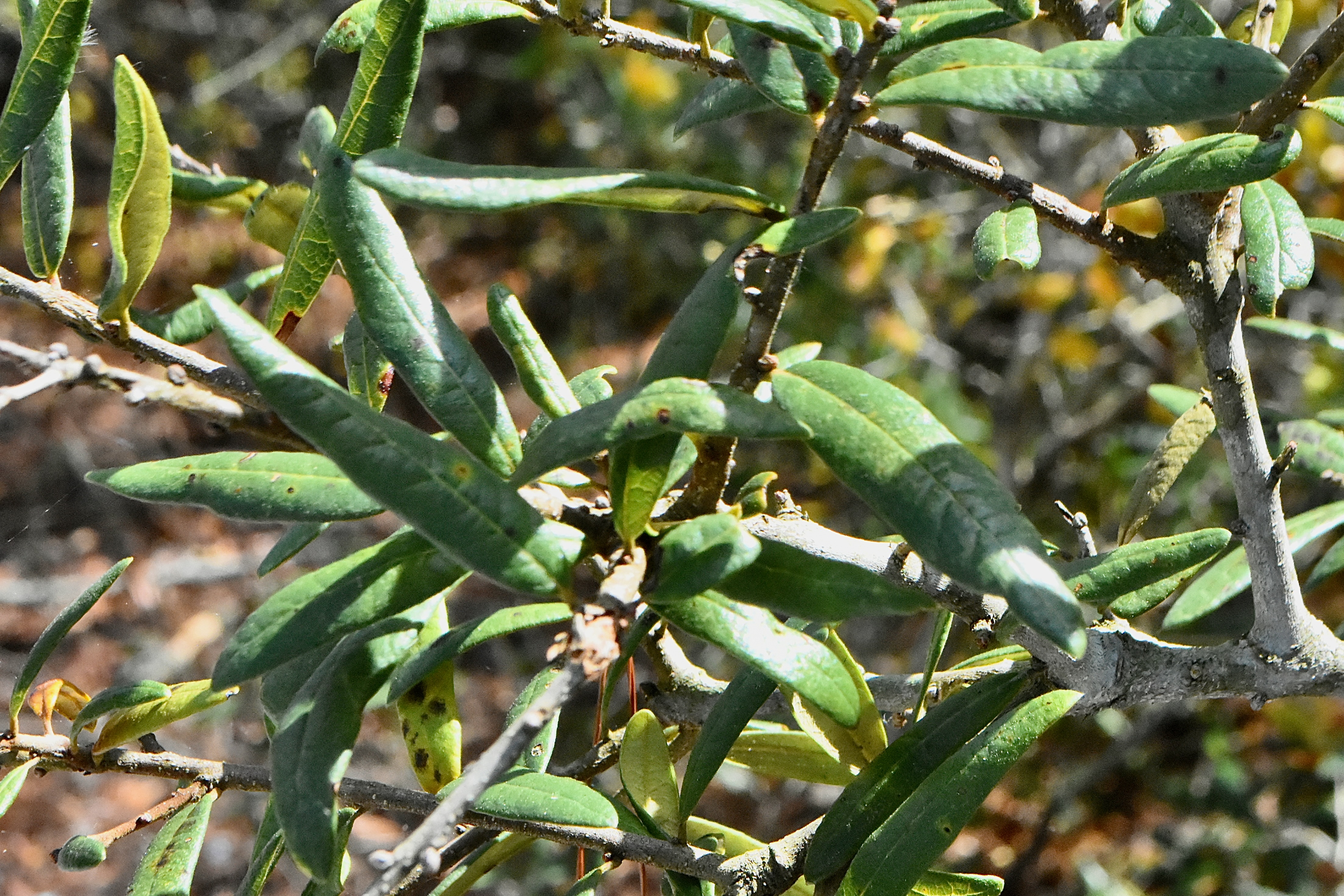
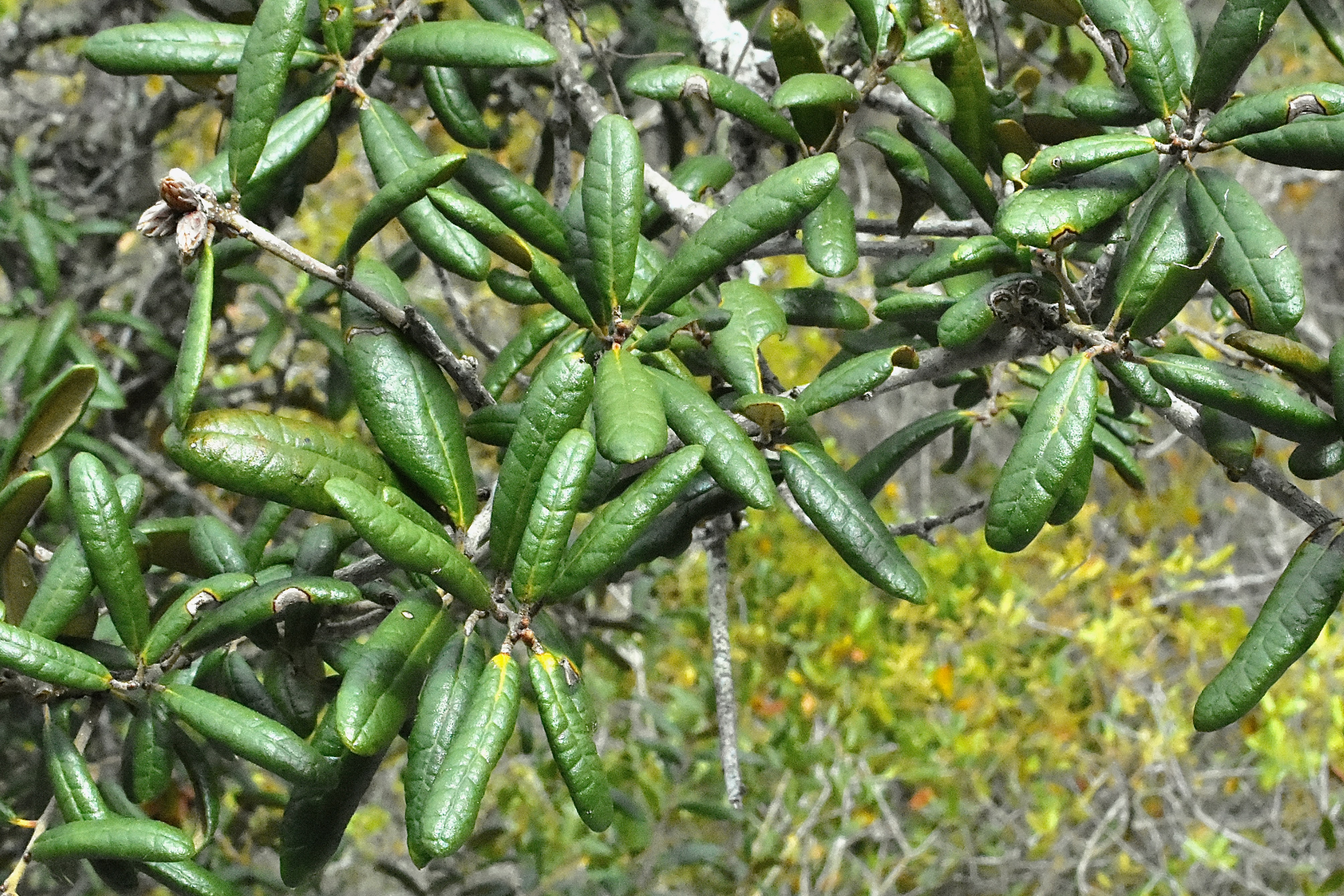
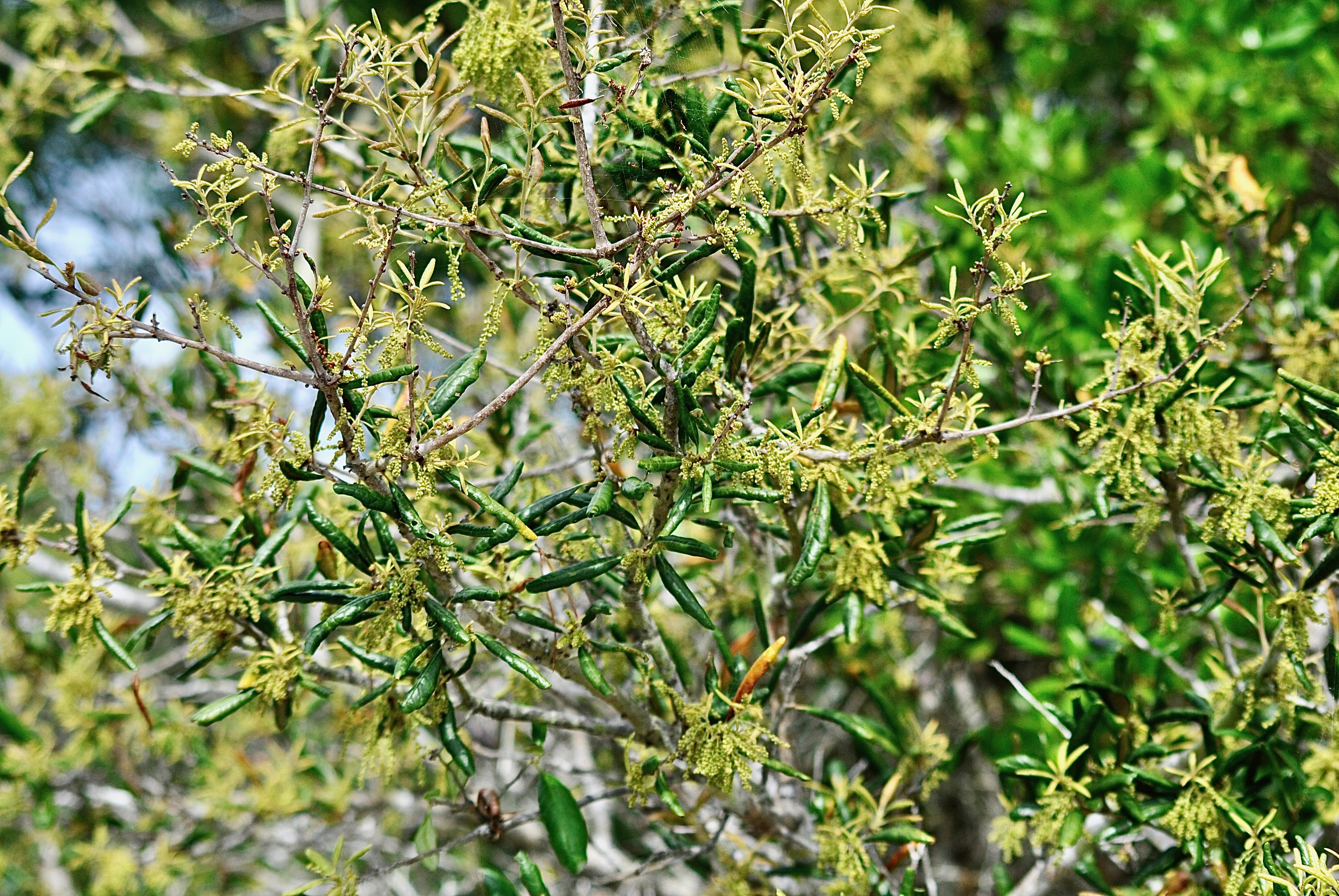
And then there is a fourth scrub oak, the sand live oak, Quercus germinata. It’s also probably the easiest of the scrub oaks to identify with their relatively long, narrow and downwardly cupped leaves.
But sand live oaks are a little different than their cousins. They can become true giants under the right circumstances.
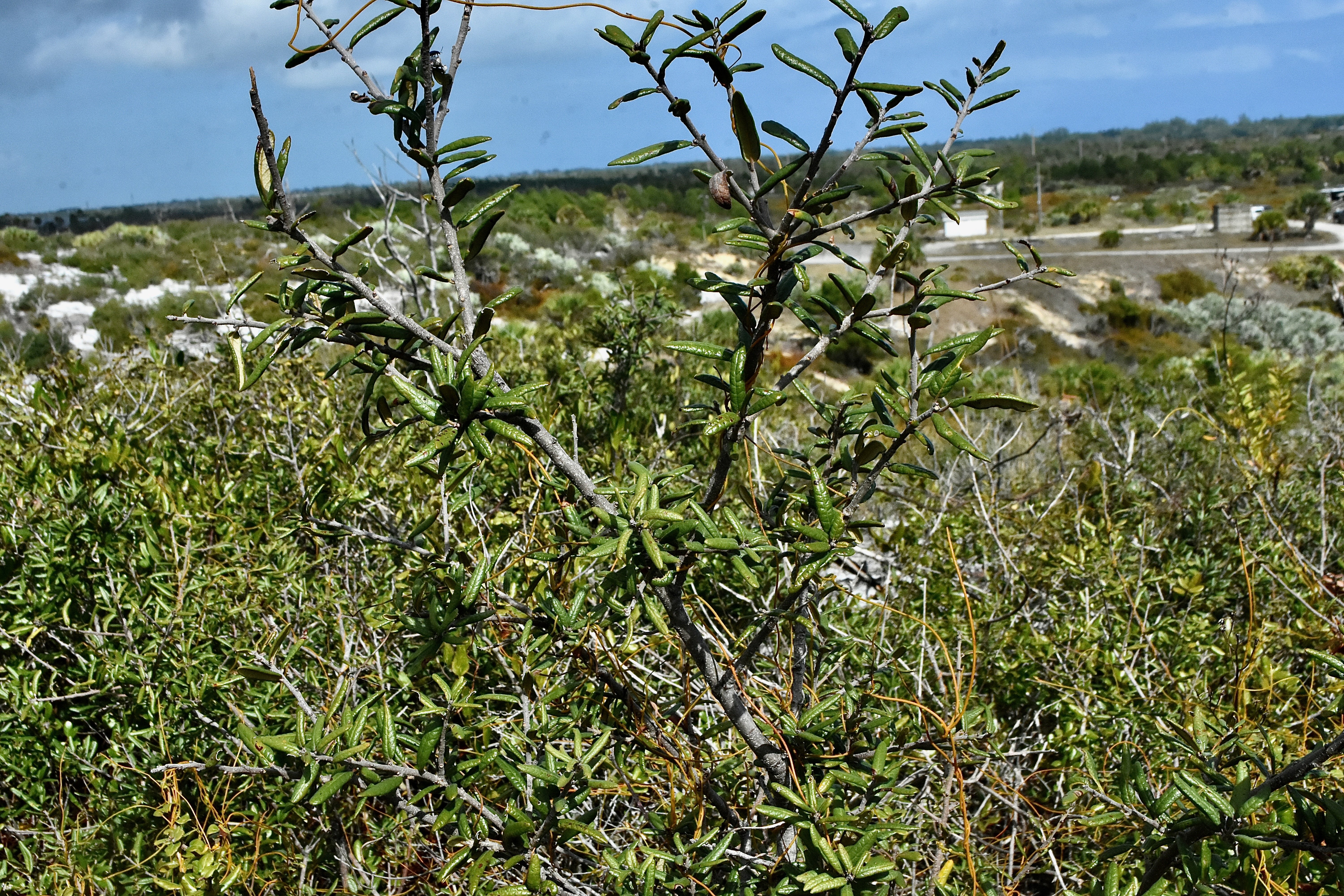
In scrub, where they’re most commonly found, sand live oaks might be shoulder height. But situate them in nutrient-rich soil where there’s a lot of moisture and these shrubs can become massive and mighty trees.
In fact sand oaks closely resemble Virginia live oaks — South Florida’s undisputed champion among oaks. So closely that some scientists classify them taxonomically as a variety of Virginia live oak. Brings to mind a botanical version of the movie Twins with Danny DeVito and Arnold Schwarzenegger.
Sand live oaks are Florida natives and can be found in most Florida counties with the notable exceptions of Miami-Dade and Monroe in our end of the state. Neither county has much in the way of scrub habitat.
Sand live oaks are also native to Virginia, the Carolinas, Georgia, Alabama, Mississippi and Texas.
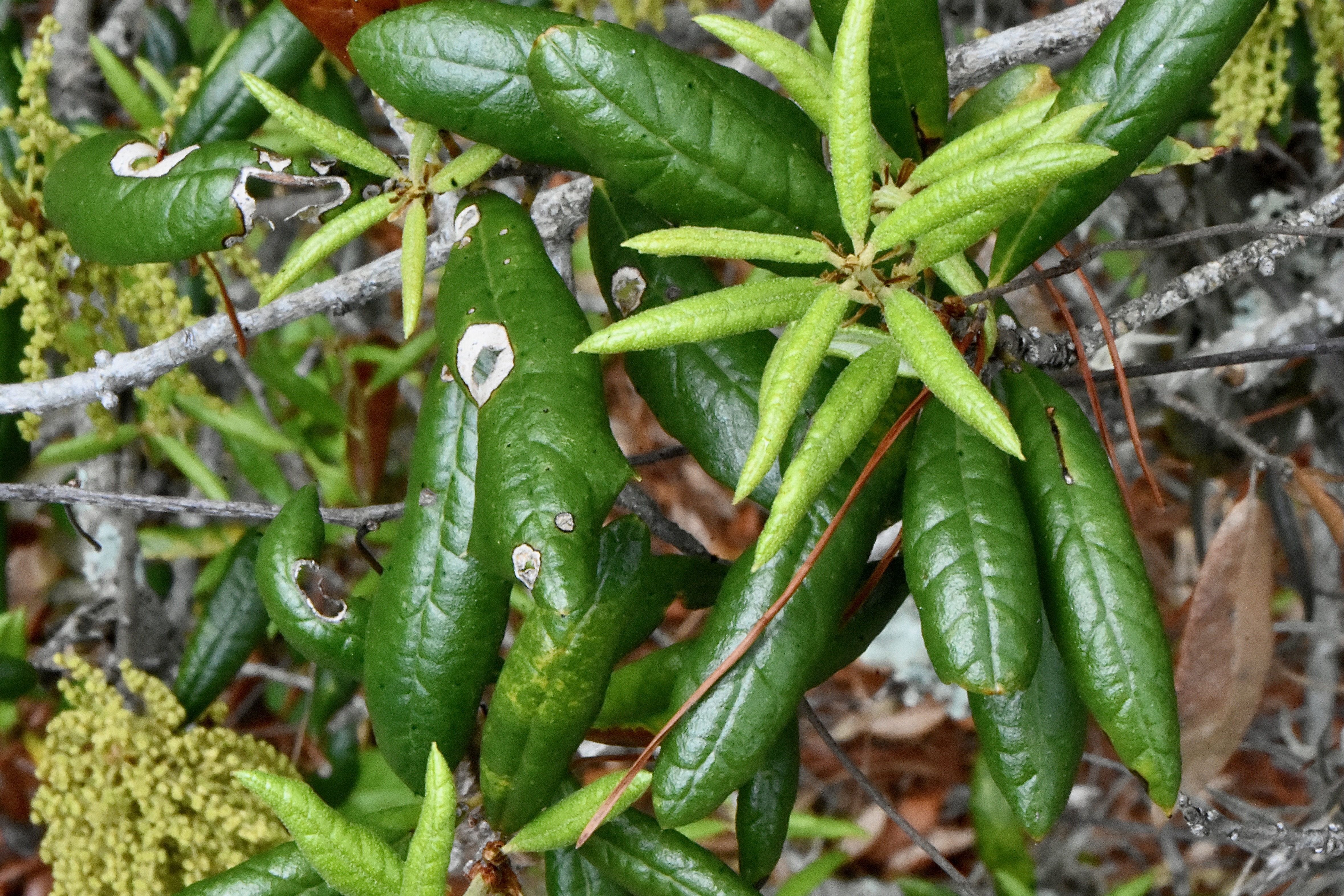
Some basics: Leaves on a sand live oak are dark green above; the underside is a dull green and covered with fine hairs. They have short petioles, or leaf stems, between an inch and a quarter two and a quarter inches long, narrow, downwardly cupped with revolute margins, or in plain English, wavy edges.
Sand live oaks flower in the spring. The blooms are cream-colored and the very definition of dull. It is wind-pollinated. The fruit is an acorn that is about two-thirds of an inch in length, with the cap covering about a third of it. One to three acorns will dangle from a penduncle, or stem.
The bark is gray, becoming black and scaly on larger trees. They can reproduce through rhizomes, or underground stems. As noted below, this is a key difference between sand oaks and Virginia live oaks. The rhizomes also will allow sand live oaks to survive low-intensity fires. The tree might be top-killed but the rhizomes will survive and re-sprout.
Under the right conditions, sand oaks can grow to 20 to 40 feet tall, but sometimes can approach 100 feet.
Sand live oaks are adaptable trees, able to thrive in different habitats. Scrubs and scrubby flatwoods are former beach dunes; their sandy soil lacks nutrients and organic material that can hold moisture. Sand live oaks are drought tolerant and will thrive in scrubby conditions though their growth will be stunted. In kinder conditions, soils with more organic content, more nutrients and more moisture, these trees can grow to true tree size or even become giants.
There are marked differences between sand live oaks and Virginia live oaks. Habitat for one, phenology another — they flower at different times of the year. Sand live oaks are more salt tolerant and tend to sucker more than their cousins. However, differences in habitat and bloom time lessen in more northerly part of their range, so the two become more alike.
Sand live oaks and its cousins are important elements in the natural scheme of things. Horace’s duskywing butterflies and red hairstreaks use sand live oaks as a host plant.
The acorns are food for the endangered Florida scrub jays, blue jays, woodpeckers and wild turkeys, white-tailed deer and a variety of squirrels.
We humans use sand live oak as a landscaping element. Larger trees are used as lumber.
As we noted, there are those who see sand live oaks as a variety of Virginia live oak. The synonyms: Quercus virginiana var. geminata, Quercus virginiana var. maritima. Sand live oaks are members of Fagaceae, the beech tree family.
Nathania P. Reed Hobe Sound National Wildlife Refuge, Mainland Unit
Photo Gallery — Click on photo for larger image