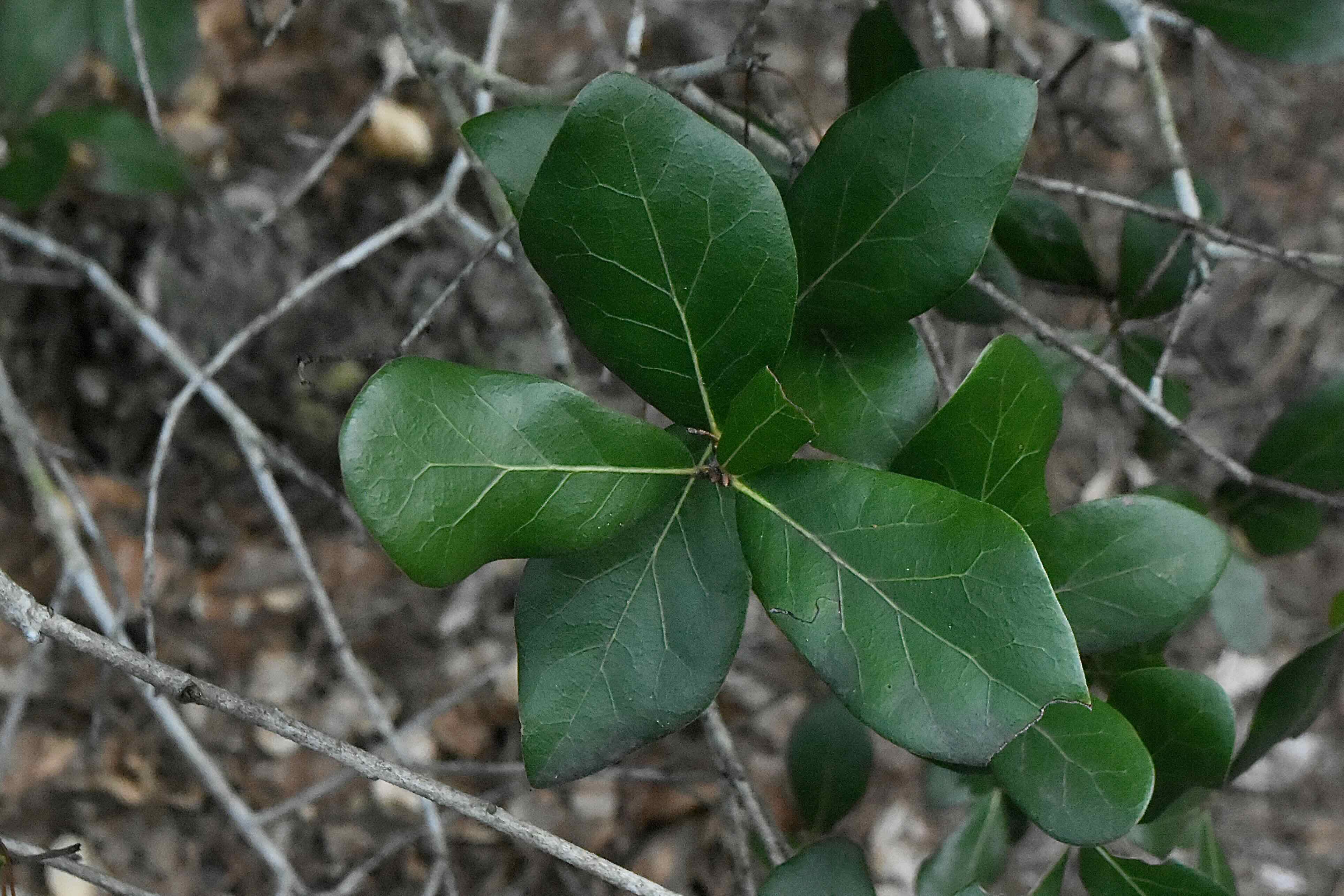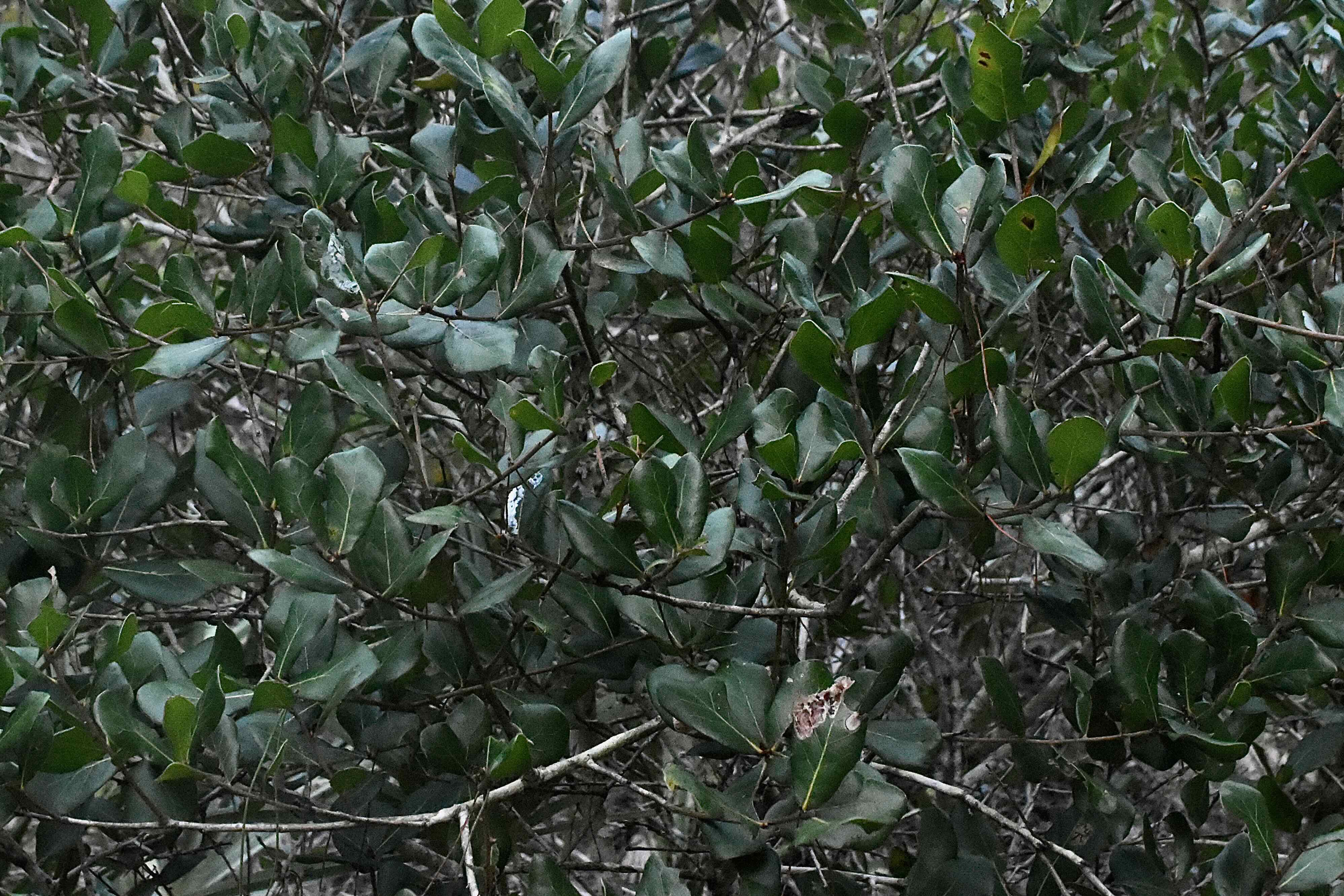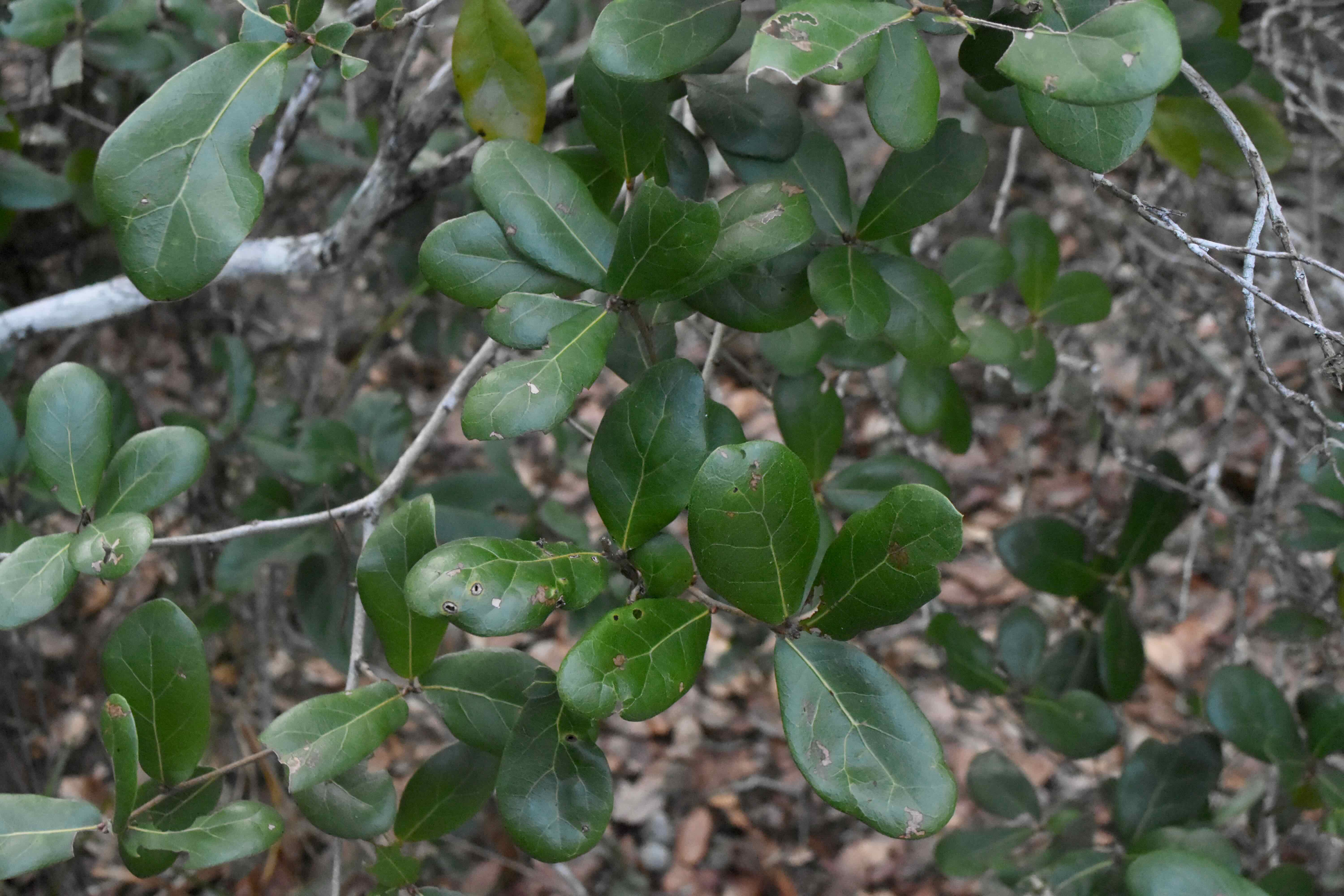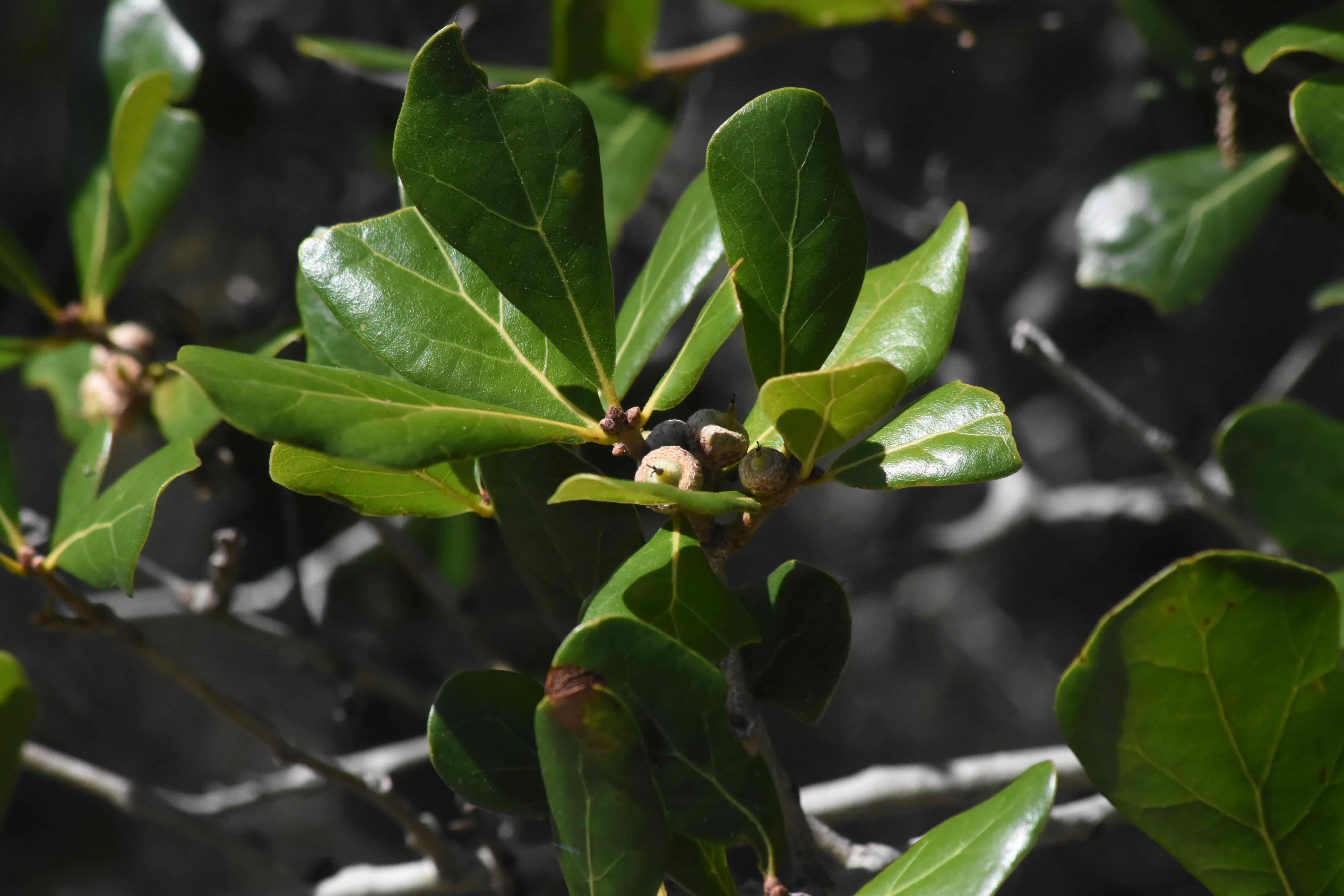
Myrtle oak, photographed at Highlands Scrub Natural Area, Deerfield Beach, Broward County, in 2016.
Myrtles have hairy arm pits, we were taught as a quick and easy way to separate Quercus myrtifolia from other of Florida’s so-called scrub oaks.
The “arm pits” are joints on the back of myrtle oak leaves where veins meet the central rib and are indeed covered with hairs. So the little ditty does work though there might be easier ways to separate the oaks. And while we’re at it we’ll explore exactly what these arm pits do.
But first, let’s cover a few basics.
Myrtle oaks are a Florida native found in most Florida counties through the Peninsula and across the Panhandle. South of Lake Okeechobee, it is absent from Monroe and Hendry counties.
It’s also found in coastal portions of Georgia, Alabama, Mississippi, South Carolina and North Carolina.
It takes to dry, sandy habitats, dunes, sandhills, scrubs and scrubby pinelands. Not only are these places dry, their sandy soils tend to lack nutrients, so it takes really tough plants to survive let alone thrive in places like this.
Myrtle oaks are one of a handful of so-called scrub oaks that are found in these places. They’re all capable of growing to substantial heights — 40 feet or more under ideal circumstance — but in these tough habitats, they tend to be more shrub-like than tree-like. By our count, there are five oak species we classify as scrub oaks in South Florida.
Myrtles are one of the most common, along with Chapman’s oaks and sand live oaks. Two others are less common, dwarf oak and Florida scrub oak.
So let’s get back to the hairy arm pits. In botany-speak, they’re called axillary tomentum and function as domatium, homes, or places of refuge, for mites. Not just any mites. Predatory mites that make their living eating herbivore mites, which in this case, might dine on myrtle leaves.
It’s a kind of bargain between flora and fauna called a mutualism, where a plant offers an insect some kind of reward or incentive in exchange for something else. In the case of myrtle oaks, it’s the shelter the hairy arm pits afford in exchange for the protection the mites offer.
Common Scrub Oaks of South Florida
-
Chapman's Oak 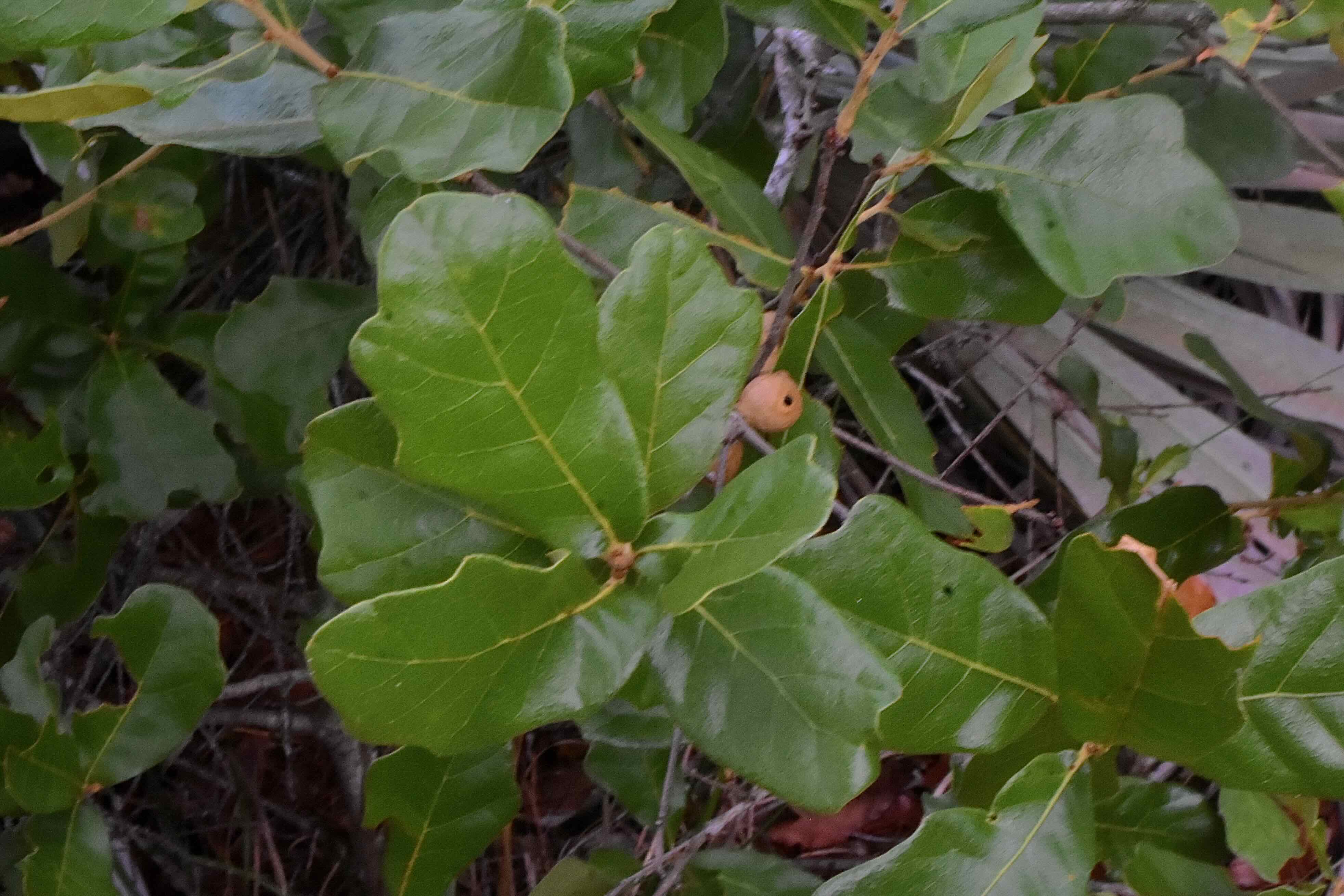
-
Sand Live Oak 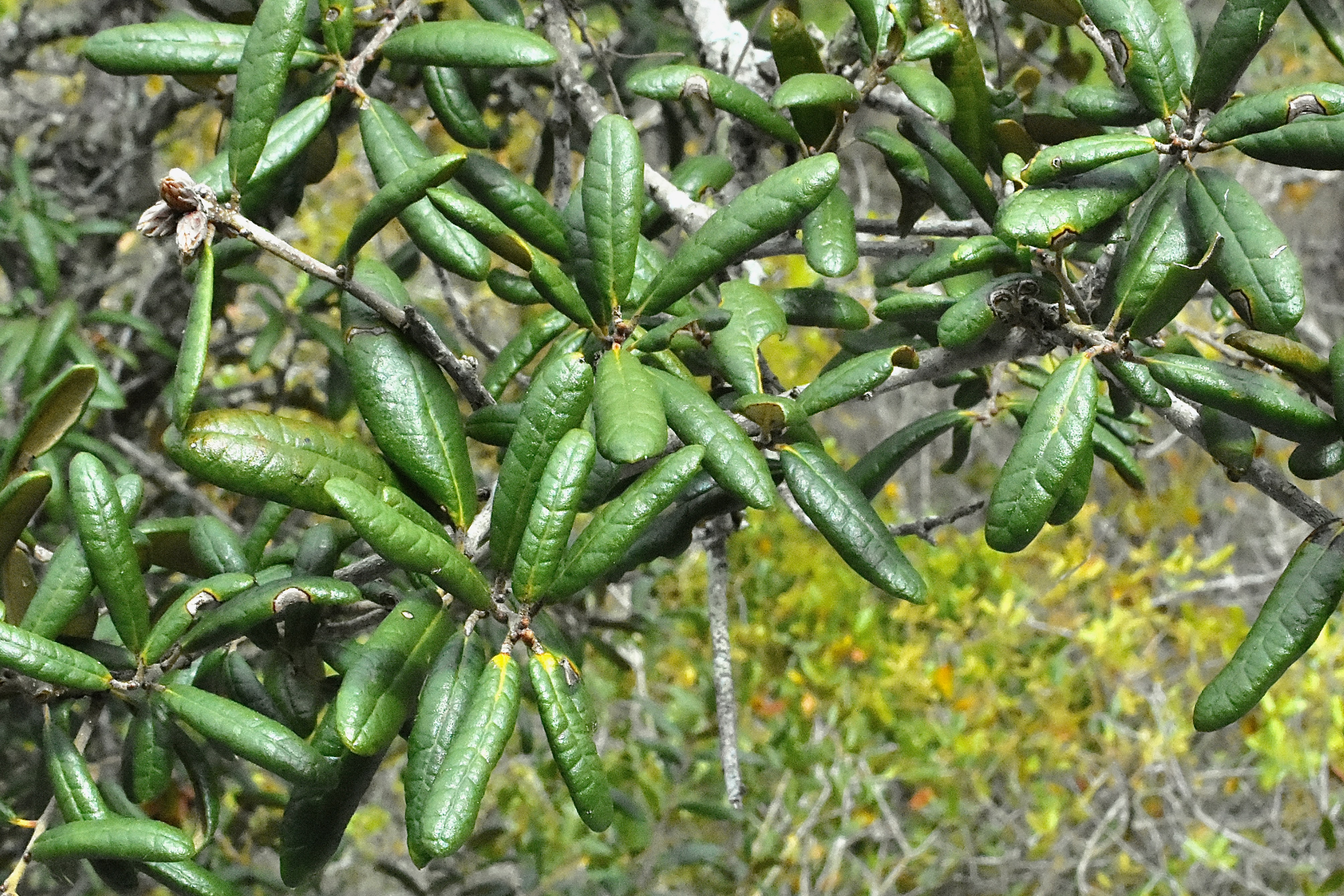
-
Myrtle Oak
This arrangement is hardly exclusive to myrtle oaks. Thousand of plant species have similar deals with mites. In fact, mutualisms between mites and plants date back to the Cretaceous Period, the age of dinosaurs. There are also mutualisms between ants and plants.
Domatium, by the way, comes from the Greek domus meaning home. Now more myrtle oak basics. The leaves are oval to elliptical in shape, narrower at the base, round at the apex or tip, about two inches long and about an inch across They’re dark and shiny green above, a duller green underneath, leathery to the touch. Of course there are those hairy arm pits, or axillary tomentum in botany speak.
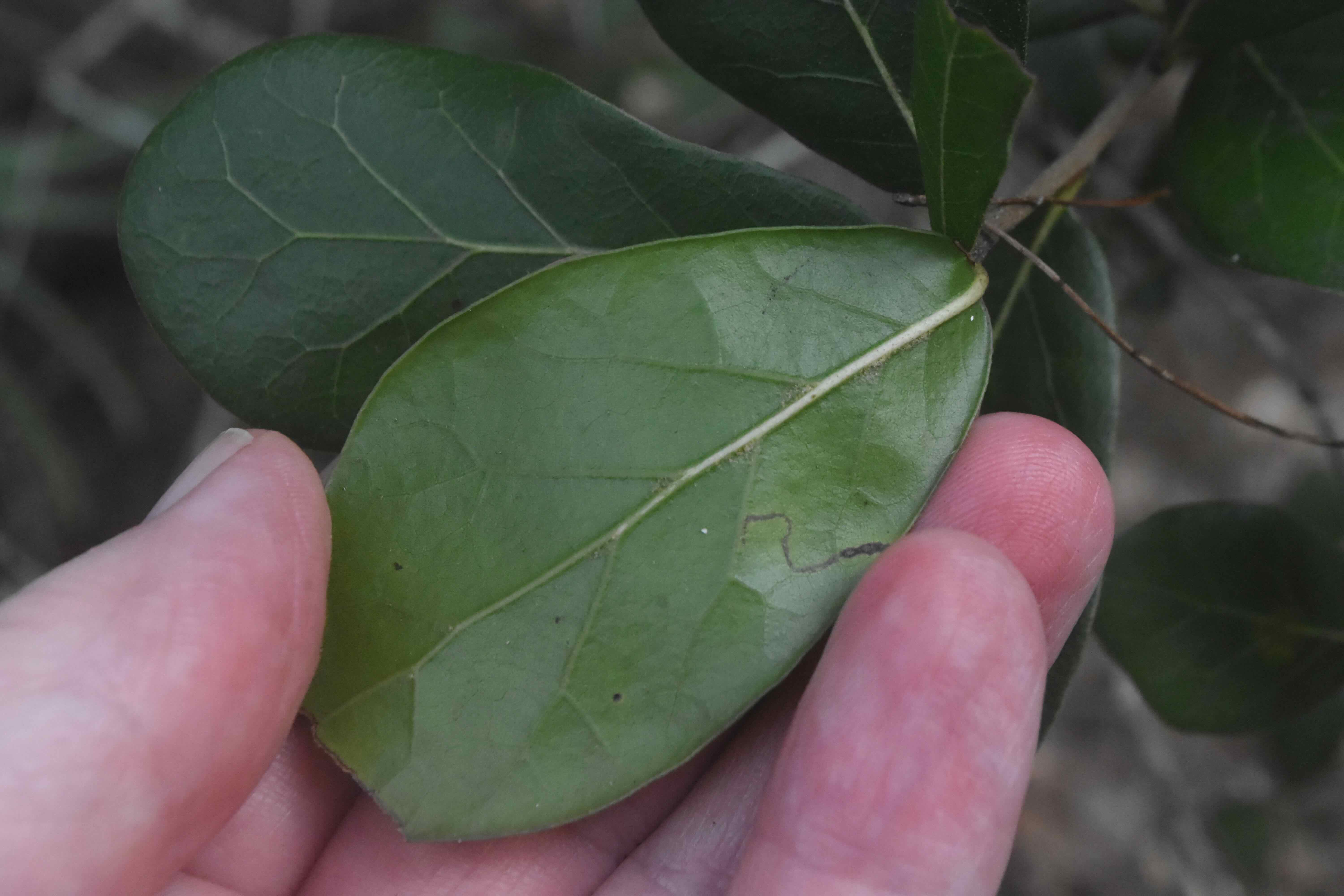
The leaves are often revolute, meaning they’re downwardly cupped. The edges, or margins, are entire, meaning no serrations or lobes. Just to note: live sand oaks have leaves that are relatively narrow in comparison with their length and downwardly cupped. Chapman oaks tend to have leaves that are lobed. See an oak with different different leaves and there’s a fair chance that it’s a myrtle.
Late winter and early spring is blooming season for myrtle oaks. The flowers are dull-looking and borne on stringy spikes called catkins. Myrtles are wind pollinated. Like all oaks, their fruit is an acorn; one or two will dangle from a peduncle, or stem.
The acorns can take as long as 18 months to ripen, and they provide food for small mammals like squirrels and birds, including the endangered Florida scrub jay. Myrtle oaks also provide cover and nesting spaces for scrub jays. Horace’s duskywings are among the butterflies that use myrtle oaks as a host plant.
Like their cousins, though, myrtles tend to be on the short side. They’re slow growers, and while they’re capable of hitting 30 or 40 feet in the air, they’re more likely to be shoulder or head height, maybe slightly taller. They can form dense thickets by sending out new shoots via rhizomes, which also provides them with a bit of insurance against low-intensity fires.
Myrtle oaks are members of Fagaceae, the family of beechs and oaks.
Highlands Scrub Natural Area
Photo Gallery — Click on photo for larger image